Havaianas and Happy Socks come together! The iconic Brazilian flip-flop brand, Havaianas, has collaborated with Happy Socks, a Swedish socks and underwear label, to launch a collection of matching split-toe socks and flip-flops.

Available at stores and websites of the two brands, the collection consists of three box sets. Each box set includes one pair of socks and one pair of matching flip-flops with unique designs inspired by the snowy landscapes of Sweden and the sunny beaches of Brazil.
The launch of the collection coincides with the arrival of summer but according to Havaianas and Happy Socks, these flip-flops and split toe socks can be worn all year long.The rubber flip-flops and the cotton socks add an amusing and eccentric touch to summer looks.
“Opposites Attract! Socks and flip-flops are the perfect combination to spread happiness and colour across the world, whatever the season,” said Viktor Tell, Founder and Creative Director, Happy Socks.
The collection features three colour combinations with quirky patterns. The first set is named the ‘Animal Dot Set’ and is detailed with palm trees and reindeer. The second set is the ‘Sport Set’ and is patterned with waves and beach umbrellas. The last box set is called ‘ The Nature Set’ which is styled with snow-capped mountains alongside skiers, surfers and snowmen.
Each box set is priced at US $ 38 and sizes vary between 33/34 and 46/47. More than one set can be ordered at a time and the return policy allows returns or exchanges within 30 days of delivery.

Sustainable brand SATVA has showcased its latest Spring Summer collection that offers a blend of style with comfort in its activewear.

The brand’s Spring Summer 2019 collection draws inspiration from naturally occurring crystals and minerals that are believed to withdraw negative energy out of the body and soul.
The collection features activewear pieces which include bra tops, leggings, buttery soft tees and tanks, jogger pants and more, in a colour palette that is dominant of soft pastel shades along with primary shades of blue, black, grey and white.
Made using ultra-soft, breathable fabrics, the collection allows comfortable body movements. The fit is designed in a way that ensures facilitation of smooth body movements that are of essence in yoga postures and asanas.
Known for conceptualising activewear in a way that is consumer-friendly and environment-friendly at the same time, SATVA claims to be free of fertilisers, chemicals, toxic dyes and other harmful heavy metals otherwise used.
The brand fulfils its environmental obligations by incorporating organic behaviour in the production of its line, and emphasises on the use of highest quality organic, non-GMO cotton and fabric.

Priced between INR 999 and INR 3,499, the collection is readily available for purchase at in.satvaliving.com
The brand warrants that a portion of all proceeds collected from their sales goes back to its local communities and agricultural programmes, thus giving back to the society as well.

The official calendar for Copenhagen Fashion Week (#CPHFW) is out!
Scheduled to take place in August, the largest fashion event in the Nordic region would witness comebacks from several Danish brands and also debut some fresh, strong talent.
This year, the event would be showcasing a total of 32 shows and 7 presentations where established brands Ganni, By Malene Birger and Designers Remix would shine amongst the  rising stars such as Saks Potts and Cecilie Bahnsen.
                                            Image Courtesy: copenhagenfashionweek.com
It is reported that CPHFW SS20 received a record number of applications and it is no wonder, keeping in mind the impact Scandinavian and Nordic fashion have had in the world of international fashion.
“It is indeed overwhelming to see so many all-time high number of applications from candidates for the upcoming fashion week, the numbers are record-breaking. Therefore, we are extra excited to be managed with a calendar that only three show days contain so many interesting, talented and innovative brands from both Denmark and neighbouring countries Sweden, Norway and Germany,” said Cecilie Thorsmark, President Director and CEO at Copenhagen Fashion Week said.
The debutants set to reveal their first collections at the CPHFW also include names such as Samsoe Samsoe and Swedish Hope. Brands making a comeback on the Danish runways post several seasons of absence include Henrik Vibskov, Soulland and Freya Dalsjø.
“I’m impressed by this season’s lineup which I find particularly strong. To me, it constitutes the perfect blend of some of Scandinavia’s most established and darling brands, as well as some very popular newcomers,” Cecilie said.
Scandinavian and German brands on the calendar include Norwegian Holzweiler, Swedish Rodebjer, Stand, Little Liffner and the aforementioned Hope and German Lala Berlin and Mykke Hoffman.
Keeping rising environmental concerns in mind, CPHFW has initiated a ban on single-use plastic bottles effective as of its SS20 edition.
An event of considerable size and impact, CPHFW said in an official statement:
Acknowledging our role and privilege as a global actor in the fashion industry, we see it as our moral obligation to inspire everyone around us, including other fashion weeks, consumers and the industry as a whole. Which is why we strive to reduce our footprint on our city – and our planet – through positive change. 
“The detrimental impact of plastic pollution is one of many challenges to tackle on a global scale. Putting an end to the distribution of single-use plastic bottles during CPHFW marks our commitment to reducing the quantity of plastic being consumed during the event, as well as our wish to inspire positive change,” Cecilie added.
The SS20 edition of CPHFW will take place from 6 to 9 August.
Sustainable brand Blanche is set to open the show on Tuesday, 6 August.

Taylor Swift is foraying into the fashion industry! And her maiden venture will be in collaboration with Stella McCartney.
The collection is a part of “Lover”, the seventh studio album by the singer, which will be rolled out on 23 August.

In a news announcement made in an Instagram Live late Thursday, Swift announced that the collection, with McCartney, comprises ready-to-wear apparel pieces. She also revealed the album artwork for ‘Lover’.
Talking about McCartney, Swift said “She’s been a friend for a really long time and just a woman that I respect so much.” Further, she added “I respect what she creates, how she creates it and there’s so much whimsy and imagination and romance to the dresses she designs.”
The album art showcases clouds in pastel blue, pink and purple hues, which can dictate the aesthetics of the collection as well, as Swift stated that the range will take cues from the album, without revealing any other specifications.
McCartney also tapped the reach Instagram offers to announce the collaboration, posting a selfie of the two on her Instagram stories with the caption: “Watch this space, Stella and Taylor collaboration coming soon.”
Notably, Swift has worn many McCartney creations in the past few days, with the latest one being a pair of rainbow sneakers she paired with her tie-dye look for her performance at the iHeartRadio Wango Tango Show on June 1.

It has not been a good year for the UK-based retail company, Ted Baker.

Post the #MeToo debacle forced out their founder Ray Kelvin in March, Ted Baker has faced numerous hurdles and has issued its second warning on profits in 4 months, the previous being in February.
Ted Baker expects an underlying pre-tax profit of 50 million to 60 million pounds as opposed to the 70 million predicted by analysts. The British high street retailer saw its shares fall down almost 14 per cent this year in addition to the 43 per cent last year due to tough competition from online retailers.
Ongoing market uncertainty due to Brexit has not only made for difficult trading condition but impacted the consumers who now want to reign in their expenditure. The brand is conscious of its image and therefore, unable to ward off competition that is offering elevated levels of promotional activity for its Spring/Summer collections. Owing to these factors, the brand has seen a 26 per cent slump in its growth this year.
The brand which is popular in North America is faced with another setback due to unseasonable weather conditions in the region. The company anticipates that such market uncertainty will continue to plague trading and profits for all the retailers throughout the year.
Ted Baker saw the appointment of Lindsay Page, a long-time finance head for the company, as Kelvin’s successor and the management was actively focusing on cost control and new product initiatives to turnaround results for the latter half of the year.
Ted Baker’s profit warning comes at a challenging time, with numerous collapses of high street chains in the first half of 2019, continuing the trend from 2018.

As New York Fashion Week Kicks Off, Designer labels are shaking things up at New York fashion week, which begins Thursday and runs through Sept. 15. A growing number are experimenting with a “see-now-buy-now” approach, selling goods straight off the runway. One of the labels-of-the-moment is Monse, a new brand launched by Laura Kim and Fernando Garcia-two veterans of Oscar de La Renta who were last week named the new designers of that label.

Image Courtesy: naitrend.com
Designer Derek Lam has told several hundred fashion editors and buyers they aren’t welcome to attend his spring 2017 runway show.Rather than his usual show for 450 guests, he has invited just 60 people-in groups of 20-to the penthouse of the Greenwich Hotel, where he will personally describe each look.
Image Courtesy: forbes.com
The Council of Fashion Designers of America, which has long held the official schedule of New York fashion week, has taken more control this year, organizing the timing of some shows and eliminating others, more in the manner of Europe’s fashion-organizing bodies. At New York label Sachin & Babi, changes in consumer demand are affecting both the show and the designs. Known for its formal wear, the label will take a decidedly informal approach, offering evening separates that can be mixed and matched for day or multiple evening events.

Image Courtesy: theldndiaries.com
Denim is challenging the athleisure trend this back-to-school season.While fashion watchers say sporty items like yoga pants and the tapered pants known as “joggers” aren’t going anywhere anytime soon, new styles and innovations in denim are making a good pair of jeans a must-have item for the coming school semester - and, perhaps, changing shopping habits this season.

Image Courtesy: silhouettetrend.com
As per analysts comfort and flexibility are key denim trends.Stretch denim continues to be a dominant theme within the teen retailers’ back-to-school collections.American Eagle Outfitters probably has one of the cleanest and clearest presentations of this denim evolution with their ‘Flex’ fabric as a backbone to their denim program, but Hollister too is sporting a new denim line dubbed ‘Advanced Stretch’ jeans.
Kudos to this new technology enabled fashion shirt that will free all of the gym rats from bragging about the gym not going in tandem with numbers on a treadmill. Simone Schramm, a German designer, has designed a garment that reacts to a wearer’s heart rate by expanding or contracting the wires woven into the garment’s fabric.

This Shape-Changing Shirt will display how your workout is going. Named “the muscle shirt,” the multilayered wearable changes color by pulling itself taut in response to the wearer’s heart rate, revealing the second layer below. The resulting tightness is meant to aid the wearer’s form and posture automatically

Image Courtesy: smones.de
The mechanism goes like this: As the heart rate increases, the motor tightens the garment, revealing an interior fabric that’s color-coded to display the upper body’s muscle groups. Once the heart rate begins to fall, the tension relaxes, and the shirt’s original gray exterior fabric resumes its shape. Created within the last year, this tech enabled fashion  garment is a work in progress, but a step forward for fitness wearables.


The next realm in apparel fashion has emerged by introduction of a T-Shirt that  looks different in design and colour if worn indoors and changes form when one steps out.
Isn’t it Surprising ?

Image Courtesy: Girggit

Girggit, a start-up apparel organisation, have launched men's T-shirts made from super fine-combed cotton that change their design and colours in sunlight. The collection is designed by a team of young fashion designers and and they are priced between Rs 855 and Rs 1,155.

This is the changing face of apparel fashion industry where a consumer pays for one but buys two different products. T-Shirts are available on all the leading e-commerce portals
Image Source: http://www.fashionforwardtrends.com
Fashion Forecast for Fabrics that are going to shape the collections this seasons can be summarized into three basic themes:

Rudimentary Refinement – which includes dry textures, natural/artificial alliances, exceptional simplicity, lively colour, powerful nature; 
Gently Irreverent – subtle imperfections, implacable fineness, subversive freshness, graphic upsets; 
Experimental Romanticism – artificial transparency, open structures, scientific spirit, boosted & piques;

Delve further into the fashion forecast details of the fabrics for S/S ’17 according to different category of products as follows:

Outwear
For summer coats - Fabrics with rich texture would include a modified nature, plastic raffia with unusual handles, design primitives like tribal tweed, dishevelled fringes and spongy cottons.

Tops
Tops and blouses will include naturally airy fabrics ,viscose or synthetics with a smooth fluid handle, soft languid cottony voiles, with softly washed finishing, featherweight silks.

Technical fabric
Performance fabrics will include cotton aspects and irregular-yarn effects for synthetics, talc-like handles.

Evening wear
Evening wear ensembles will revolve around  Intermittent, wholly fine cut-yarns play on transparency.More simple designs will include large, irregular and multi-coloured stripes.

      Image Source: http://www.fashionforwardtrends.com/


Image Source: Google

Designers and exporters have witnessed an influx of softer hues as a major colour input. Versace in S/S ’16 showcased array of smart suits in ice pink while Dolce Gabanna showed varied suits in light peach at Bluemarine or gentle flowing garments in candy colours. Focusing on pastel hues, the S/S ’17 fashion trends gained grace; paving way for delicious blush pink, baby blue, mint green and lavender tones. Hottest colour for spring summer trends 2017 are Pastel tones - Pink, lilac, light blue and mint green.
Technology enhanced fashion market is still in its infancy. Brands have started designing fashion products around technology but only few customers buy them that too because of novelty factor attached to it while most of them ignores.

Eventually, retailers’ lack of enthusiasm for the technology-enhanced fashion products category but  one thing is certain this category will be the future of fashion retail. However, the real revolution of technology-enhanced fashion is going to be modular, customisable,upgradable products so that it is embraced by the consumers.


Few questions that arises in favour of innovatively designed fashion products are How can brands continue to grow if they don’t launch new products on a regular basis? How can consumers stay on trend without buying new products and what can be done with the “old” products besides dumping them?

There are other benefits too .The consumer only pays to upgrade the product in stages so, unlike with luxury products, brands can create a long lasting quality product without high upfront costs. The risk of product redundancy is eliminated which means consumers will be more likely to buy a new innovative product.


Africa fashion week slated to be held in Nigeria on 1st July 2016 will feature Textile and Garment Manufacturing conference - first ever conference of its kind in the country, where industry experts will gather under one roof, to discuss and discover the potentials within the fashion industry for Nigeria.
The conference aims to highlight innovative systems that may create a powerful economic base for Nigeria, as fashion has the capacity to create jobs, promote creativity and individualism while providing social security.

http://fashion.apparelresources.com/fashion-runways/

There will be a range of topics to be discussed in the conference such as Job Creation in the Garment Manufacturing Industry.How do manufacturers  deal with the infrastructure issues and still  make profit  New Channels of E-commerce in the Fashion Show is Textile Manufacturing a Viable Option? How can we tap into the skills of the foreign market Retailing and Setting up a Fashion Business in Nigeria (The Dynamics) and Different Financing Options.

Africa Fashion Week Nigeria, founded by Nigeria’s own Ronke Ademiluyi, has conquered the whole of Europe with the London Version of the project: Africa Fashion Week London. Africa.

The Nigerian Edition, Africa Fashion Week Nigeria,will celebrate its third anniversary in July. The show is persistently working for the development of young fashion designers of Africa by giving them subsidised runaways and visibility while enabling them to convert their talent into economic self-sustainability analysis.
Today, technology has perpetually changed the face of retailing! Whilst, the online retail has progressively evolved into Mobile retail or M-commerce, an array of mobile based apps and omnichannel retail has made our shopping experience all the more exciting and easier.

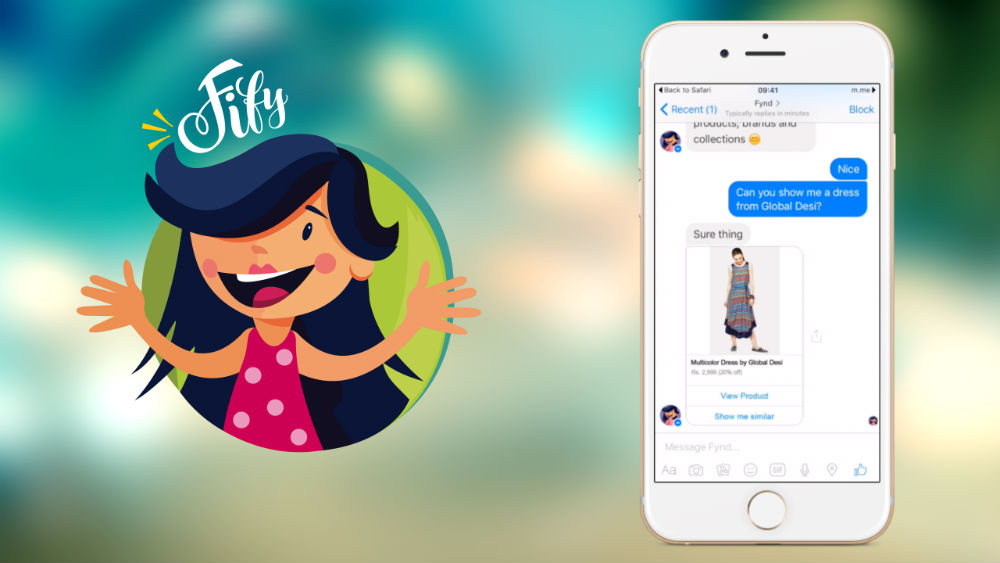
In a recent development, Mumbai-based Shopsense Retail Technology, the startup that founded fashion shopping app Fynd, has launched Fify-a fashion shopping bot, which the company expects will generate 25 per cent of revenue in the coming three months.

Fify, in its beta phase, will act as a personal virtual shopping assistant; providing insights on trends, guidance on celebrity styles and inform the users about the new product arrivals. The fashion shopping bot claims to have already seen over 50,000 conversations since its launch last week on the Facebook Messenger.


At present, phase one of the fashion shopping bot is operational and will help the consumers to discover the products. In subsequent phases, the bot will grow to understand the style of the consumer on the basis of their online behaviour and predict what they are likely to buy.

According to the company, the ideal phase of engagement with Fify would involve product discovery, transaction, fulfilment and then post-transaction interaction.
Luxury shopping is no longer confined to high-end bags and shoes! Today, the luxury patrons are all the more experimental and are using travel as a tool for gaining authentic experience. In 2015, China had 120 million outbound tourists, who spent an estimate of US$229 billion on shopping overseas, leaving the rest of the world way behind. The top purchase of the Chinese tourists featured fashion and accessories and indisputably, the effect of such wave was indeed lucrative for the fashion brands.


Acknowledging the impact of globetrotters on their brand sale, luxury fashion brands are obligated to come up with a strategy that will not only help them to take the advantage of traveller’s deep pockets but also reap the benefit of being a global brand. Besides, the luxury brands also need to evolve in order to keep consumers’ interest intact.

Since wealthy consumers move their dollars from product to experience, luxury brands need to focus on creating one-of-a-kind; an immersive experience that will eventually turn into a purchase.

Moreover, offering an exclusive experience is a must. For instance, if Burberry, a brand that is quintessentially British in its inspiration and craftsmanship, evolves further by incorporating British customs and rituals in a meaningful way, it could deliver a truly unique brand experience.

 This shift from product to experience is happening faster for the millennials who give value to ownership, connection, and authenticity, as the studies suggest Luxury travel and high-fashion brand should realise this opportunity of partnership.
Few renowned brands that have opted for mass customisation are :


NikeID - an online service that allows customers to create their own clothing by customising the colour, design.

Louis Vuitton’s Mon Monogram  - lets consumers add personal initials and colours to the brand’s bags

Prada Customize - lets people add personal lettering to bags, as well as allows them to configure their own shoes and sunglasses
Indochino - An e-commerce start-up that lets you buy a made-to- measure suit


Bow & Drape - Clothing for the millennial generation offers trend-driven clothing and accessories with tonnes of options to personalize.

Not just restricted to mass fashion or luxury, customisation is now sweeping through the whole of retail, as many start-ups have taken up the onus to meet the customers needs before making them loyalists.


Earlier a term familiar to only high-end customers, has now become an essential tool to retain customers of any brand, luxury or otherwise. It is called customisation. 
A retailer’s strategic tool to deliver products in way the customer prefers it, born out of every consumer’s desire to stand out, to look the best, the most fashionable and always very different, somewhat a level above the rest.


But how? Each brand carries out a slew of consumer behaviour researches to understand the taste and preferences of the modern consumers, and accordingly designs the products.
Several brands have applied the formulae of mass customisation, in which masses get the chance to customise every product they want to own. Some brands that command mention here include Nike, Converse and Burberry that caught the imagination of consumers with their ever-innovative platforms and customer-friendly apps.
Burberry launched its Burberry Scarf Bar, letting customers monogram their initials on scarves before they place the order. Many mass brands as well as luxury labels followed this trend

Burberry Scarf Bar


.


Victorian Etiquette

Balmain: High waist skirts, with blouses that had frills on the sleeves.
Chanel: Head-to-toe frills on pristine off-shoulder dresses and white lace gloves were their thing
Chloe: Designs in more mild shades like olive and mustard, clubbed with diaphanous frills on the waist, sleeves and neckline were presented.

Feline Fury
Givenchy: Bright yellow knit, with black & yellow leopard print skirts, coupled with coats in brown and black leopard prints.
Carven: Short coatdresses covered in tiger prints.
Dries van Noten: Used spots on wide-legged pants, breaking the monotony of the runway collections.


80's Redux
 Milan showcased yet another range of spectacular designs for the world to follow embracing a contemporary take on nostalgic styles of the 80’s, while lending a fresh twist to your suit-up styles. Designers also embarked on decorating the Victorian era dresses with interesting modifications that reached near perfection.
Isabel Marant: Her designs ranged from puffed shoulders to flouncy silhouettes, with an outing of strong shoulders, appearing on oversized sweaters and coats.
Lanvin: The French brand showcased a collection filled with flouncy skirts and defined shoulders.
Moschino: It was all about leather, fishnets and graffiti.

Covered in Sequin
The collections presented at the Paris Fashion Show rendered fresh twists to popular designs, with eye-catching accessories, digital-inspired prints and bold trends with sequins ‘from head-to-toe’.

Chanel - Monochrome designs on strapless dresses with black sequins and white borders

Gucci - Mixed patchwork on long, relaxed dresses, covered in green sequin.

Moschino- Sequins paired with sheer fabrics like chiffon or net