Image Source: Google

Designers and exporters have witnessed an influx of softer hues as a major colour input. Versace in S/S ’16 showcased array of smart suits in ice pink while Dolce Gabanna showed varied suits in light peach at Bluemarine or gentle flowing garments in candy colours. Focusing on pastel hues, the S/S ’17 fashion trends gained grace; paving way for delicious blush pink, baby blue, mint green and lavender tones. Hottest colour for spring summer trends 2017 are Pastel tones - Pink, lilac, light blue and mint green.
Technology enhanced fashion market is still in its infancy. Brands have started designing fashion products around technology but only few customers buy them that too because of novelty factor attached to it while most of them ignores.

Eventually, retailers’ lack of enthusiasm for the technology-enhanced fashion products category but  one thing is certain this category will be the future of fashion retail. However, the real revolution of technology-enhanced fashion is going to be modular, customisable,upgradable products so that it is embraced by the consumers.


Few questions that arises in favour of innovatively designed fashion products are How can brands continue to grow if they don’t launch new products on a regular basis? How can consumers stay on trend without buying new products and what can be done with the “old” products besides dumping them?

There are other benefits too .The consumer only pays to upgrade the product in stages so, unlike with luxury products, brands can create a long lasting quality product without high upfront costs. The risk of product redundancy is eliminated which means consumers will be more likely to buy a new innovative product.


Africa fashion week slated to be held in Nigeria on 1st July 2016 will feature Textile and Garment Manufacturing conference - first ever conference of its kind in the country, where industry experts will gather under one roof, to discuss and discover the potentials within the fashion industry for Nigeria.
The conference aims to highlight innovative systems that may create a powerful economic base for Nigeria, as fashion has the capacity to create jobs, promote creativity and individualism while providing social security.

http://fashion.apparelresources.com/fashion-runways/

There will be a range of topics to be discussed in the conference such as Job Creation in the Garment Manufacturing Industry.How do manufacturers  deal with the infrastructure issues and still  make profit  New Channels of E-commerce in the Fashion Show is Textile Manufacturing a Viable Option? How can we tap into the skills of the foreign market Retailing and Setting up a Fashion Business in Nigeria (The Dynamics) and Different Financing Options.

Africa Fashion Week Nigeria, founded by Nigeria’s own Ronke Ademiluyi, has conquered the whole of Europe with the London Version of the project: Africa Fashion Week London. Africa.

The Nigerian Edition, Africa Fashion Week Nigeria,will celebrate its third anniversary in July. The show is persistently working for the development of young fashion designers of Africa by giving them subsidised runaways and visibility while enabling them to convert their talent into economic self-sustainability analysis.
Today, technology has perpetually changed the face of retailing! Whilst, the online retail has progressively evolved into Mobile retail or M-commerce, an array of mobile based apps and omnichannel retail has made our shopping experience all the more exciting and easier.

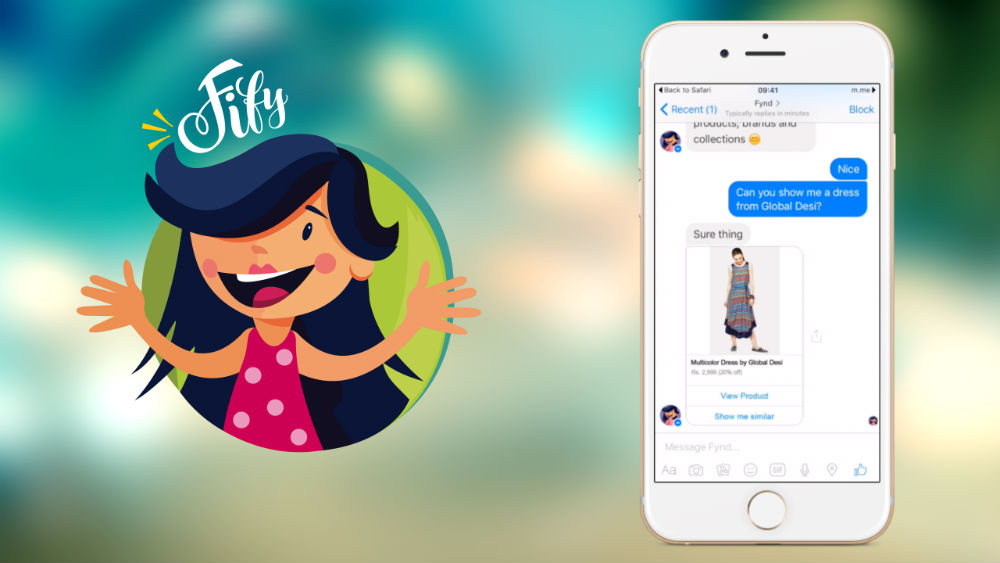
In a recent development, Mumbai-based Shopsense Retail Technology, the startup that founded fashion shopping app Fynd, has launched Fify-a fashion shopping bot, which the company expects will generate 25 per cent of revenue in the coming three months.

Fify, in its beta phase, will act as a personal virtual shopping assistant; providing insights on trends, guidance on celebrity styles and inform the users about the new product arrivals. The fashion shopping bot claims to have already seen over 50,000 conversations since its launch last week on the Facebook Messenger.


At present, phase one of the fashion shopping bot is operational and will help the consumers to discover the products. In subsequent phases, the bot will grow to understand the style of the consumer on the basis of their online behaviour and predict what they are likely to buy.

According to the company, the ideal phase of engagement with Fify would involve product discovery, transaction, fulfilment and then post-transaction interaction.
Luxury shopping is no longer confined to high-end bags and shoes! Today, the luxury patrons are all the more experimental and are using travel as a tool for gaining authentic experience. In 2015, China had 120 million outbound tourists, who spent an estimate of US$229 billion on shopping overseas, leaving the rest of the world way behind. The top purchase of the Chinese tourists featured fashion and accessories and indisputably, the effect of such wave was indeed lucrative for the fashion brands.


Acknowledging the impact of globetrotters on their brand sale, luxury fashion brands are obligated to come up with a strategy that will not only help them to take the advantage of traveller’s deep pockets but also reap the benefit of being a global brand. Besides, the luxury brands also need to evolve in order to keep consumers’ interest intact.

Since wealthy consumers move their dollars from product to experience, luxury brands need to focus on creating one-of-a-kind; an immersive experience that will eventually turn into a purchase.

Moreover, offering an exclusive experience is a must. For instance, if Burberry, a brand that is quintessentially British in its inspiration and craftsmanship, evolves further by incorporating British customs and rituals in a meaningful way, it could deliver a truly unique brand experience.

 This shift from product to experience is happening faster for the millennials who give value to ownership, connection, and authenticity, as the studies suggest Luxury travel and high-fashion brand should realise this opportunity of partnership.
Few renowned brands that have opted for mass customisation are :


NikeID - an online service that allows customers to create their own clothing by customising the colour, design.

Louis Vuitton’s Mon Monogram  - lets consumers add personal initials and colours to the brand’s bags

Prada Customize - lets people add personal lettering to bags, as well as allows them to configure their own shoes and sunglasses
Indochino - An e-commerce start-up that lets you buy a made-to- measure suit


Bow & Drape - Clothing for the millennial generation offers trend-driven clothing and accessories with tonnes of options to personalize.

Not just restricted to mass fashion or luxury, customisation is now sweeping through the whole of retail, as many start-ups have taken up the onus to meet the customers needs before making them loyalists.


Earlier a term familiar to only high-end customers, has now become an essential tool to retain customers of any brand, luxury or otherwise. It is called customisation. 
A retailer’s strategic tool to deliver products in way the customer prefers it, born out of every consumer’s desire to stand out, to look the best, the most fashionable and always very different, somewhat a level above the rest.


But how? Each brand carries out a slew of consumer behaviour researches to understand the taste and preferences of the modern consumers, and accordingly designs the products.
Several brands have applied the formulae of mass customisation, in which masses get the chance to customise every product they want to own. Some brands that command mention here include Nike, Converse and Burberry that caught the imagination of consumers with their ever-innovative platforms and customer-friendly apps.
Burberry launched its Burberry Scarf Bar, letting customers monogram their initials on scarves before they place the order. Many mass brands as well as luxury labels followed this trend

Burberry Scarf Bar


.